
What a Scary Car Ride Taught Me About Boundaries

Someone offered me a ride home recently. I was grateful.
Then we hit the canyon road and started barreling along at 70mph in a 45 zone. I felt uneasy. Then anxious. Then scared.
And I said nothing. For a while.
I told myself it was my driving anxiety. My stuff to manage quietly. I tried to look normal in the passenger seat while my nervous system was sending every alarm it had.
I even texted my sister hoping she was home so I could get dropped off sooner. She was at work. So I sat with it a little longer.
Finally I said something. I told the driver how anxious and scared I was feeling. She slowed down. Took calmer roads. Talked me through it. She was kind about it.
By the time I got home I was flooded with shame.
It took me a while to come down. But as I kept processing, something began to shift. I started to feel proud. I had made it about me and what I needed, not about her driving. Not a criticism. Just an honest, this is hard for me.
Later I told my family and friends how scared I had been and why. They said they would have been scared too.
I was like... what?
I had been treating my fear as a flaw. As something to be dismissed and managed and overcome with a you just need more faith and less fear talk with myself. And the people I told looked at me like my fear was completely reasonable.
My therapist reminded me of something simple and honest.
I could have set a boundary before we even left. It could have sounded something like this: I have some driving anxiety and I do best when we stay near the speed limit and keep some distance from other cars. Does that work for you? If not, I am happy to find another ride.
No shame spiral. No white-knuckling it in the passenger seat. No shame afterward.
Just: this is what I need. Can you work with that? If not, I will find another way.
I am still amazed sometimes that I am allowed to do that. I grew up in an environment where asking for what you needed did not feel like an option. That wiring runs deep. I am still working on it.
AND I am learning.
Here is what I want to offer you about boundaries, because I think the word gets used so often and so loosely that it has lost some of its meaning.
A boundary is not a wall. It is not a punishment. It is not about controlling what someone else does.
A boundary is something you create for yourself, from love.
It starts with a question: what do I actually need here?
Not what should I tolerate. Not what do I feel guilty about wanting. What do I need?
The formula is simple:
If you choose to do X, I will do Y.
With the driving situation that would look like: If you choose to drive faster than the speed limit, I will find another ride.
Clean. Kind. No drama.
The key is the follow-through. A boundary without a consequence is just a wish. When you say what you will do and you mean it, the boundary becomes real. For you and for everyone involved.
Here is where most people get stuck.
The first place is confusing a boundary with a demand. A demand says: you must change your behavior. A boundary says: I will change mine if yours does not work for me. One is about controlling another person. One is about taking care of yourself. Do you feel the difference?
The second place is shame. The deep belief that needing something makes you a burden. That asking for what you want means you are too much. That having a nervous system that gets scared is a character flaw rather than a human experience.
I want to say this clearly.
Needing things is human. Having a nervous system that gets scared is not a flaw. Asking for what you need is one of the most loving and honest things you can do, for yourself and for the people around you.
When I finally said something in that car, the driver slowed down. She was kind. She wanted to help. My shame had convinced me that asking would be a problem. The reality was the opposite.
This connects to something that runs much deeper than one car ride.
The nervous system that learned early on that needing things was not safe will keep sending that same message for decades. Long after the original situation is gone. The body keeps the pattern running because it was wired in through repetition and it has not yet been given something new to run toward.
The anxiety I felt in that car, the shame afterward, the self-talk that told me to dismiss my fear as weakness, all of that was a much older pattern playing out on a canyon road.
The work is not forcing yourself to be fearless. It is learning to hear what the body is saying, trust that it is real, and ask for what you need with kindness and clarity.
You are allowed to need things.
You are allowed to say so.
If you could be brave and bold and say if you... then I will... and follow through, what would change in your life?
I would genuinely love to hear.
waltonwellness.com | Fall sessions are open: BOOKING LINK
Jill Walton is a Life Coach, Integrative Change Work Practitioner, and nervous system specialist at Walton Wellness Group. waltonwellness.com
If something here landed — there's more. Weekly stories on nervous system patterns and coming home to yourself.
Author
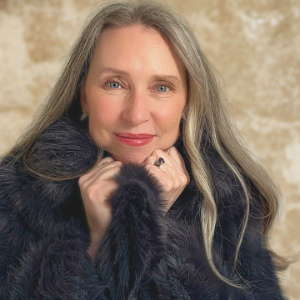
Jill Walton
Life Coach · Nervous System Specialist · Integrative Change Work Practitioner · Emotion, Body & Belief Code Certified
I've helped people shift the patterns that talk therapy alone couldn't touch. The work happens in the body — and that's exactly where I work.
