
I Was So Sure I Was Right
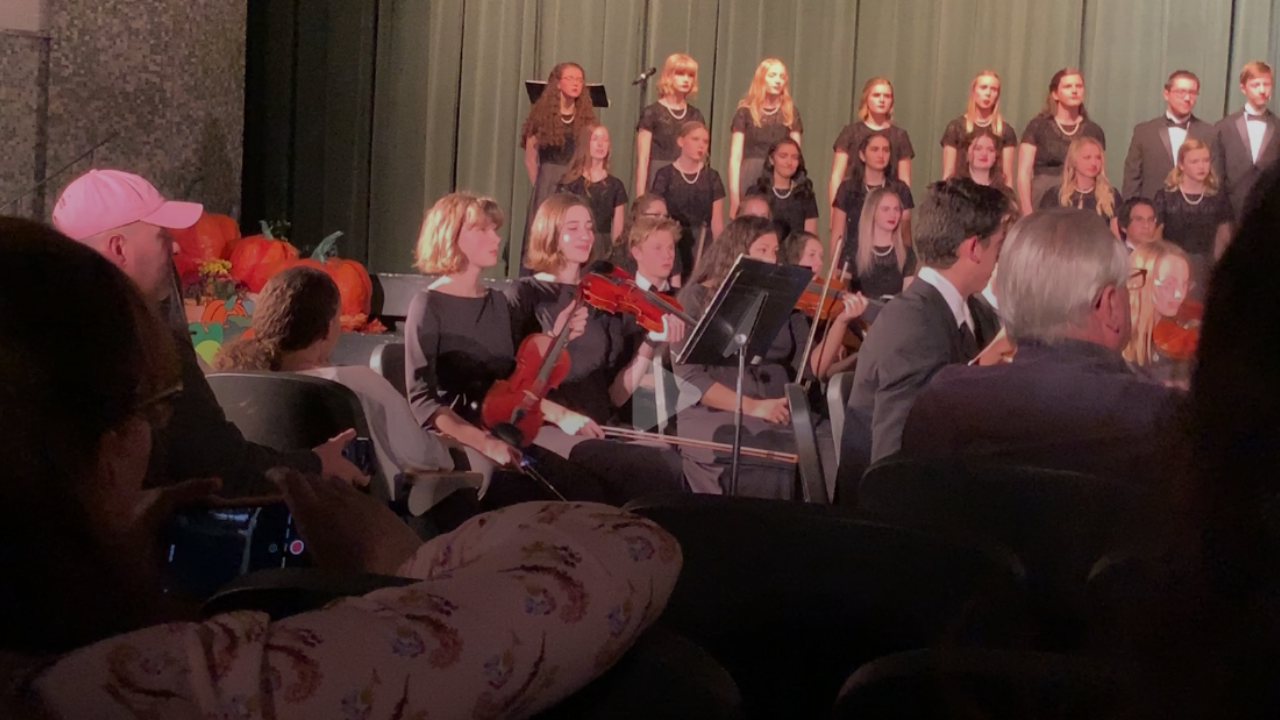
My daughter had a violin concert her senior year. I was there with my camera, proud and ready.
As the evening went on, I noticed something. Every time I stood up to take a picture, the woman directly in front of me would shift just enough to block my shot. Every time. The strangers sitting next to me leaned over and said something about it.
And then the pieces clicked.
A few weeks earlier, a boy had accused my daughter of breaking his violin bow. His mother had called me and asked us to pay $1,200 for a new one. I had investigated for two weeks and determined we were not responsible. We did not pay.
Standing in that concert hall, I was certain. This was her. She was angry. This was intentional.
My mind assembled the evidence quickly. The repeated blocking. The timing. The fact that strangers had noticed. It felt airtight.
The story felt true. It was completely wrong.
After the concert I followed her out of the hall. I watched her meet up with her son.
It was not her. Not even close. She had no idea who I was.
I stood there and just let that land.
A good friend of mine used to say: we are often wrong as often as we are right. I have returned to that line more times than I can count. It has done more for my relationships than almost anything else I have learned.
Two things were happening at once
Here is what I understand now about that night.
My nervous system was doing exactly what it is designed to do. It detected a real pattern. The blocking happened repeatedly. There was a measurable signal. That is what Stephen Porges calls neuroception: the nervous system assessing the environment below the level of conscious thought, below words, below even feeling.
My nervous system was right that something was happening.
My mind then took that signal and built a story around it. A complete story, with a villain and a motive and a satisfying explanation. And because the signal underneath was real, the story felt true.
The signal was accurate. The story was wrong.
This is one of the most important things I teach: the nervous system and the mind are not the same thing. And confusing them costs us.
What Gendlin understood
Dr. Eugene Gendlin, whose work is the foundation of what I practice and teach, wrote something I return to constantly:
“We think so much more than we can say. We feel so much more than we can think. We live so much more than we can feel. And still, there is so much more.”
That night in the concert hall, I was living something my feelings had not caught up to yet. My nervous system was tracking the situation. My mind jumped several layers ahead, into certainty and story.
But beneath both of those there was something quieter. A felt sense that said: not yet. Go find out.
That is not the same as doubt. It is not uncertainty. It is a different quality of knowing, slower and more grounded than certainty. Gendlin called it the felt sense. I call it inner listening.
The practice
Inner listening is the skill of slowing down enough to feel the difference between the story your mind is building and the quieter signal underneath it.
It is learnable. It does not come naturally in a culture that rewards speed and decisiveness. But with practice, you begin to recognize the texture of a story versus the texture of something you actually know.
Stories feel urgent. Certain. They gather evidence. They explain.
The felt sense is quieter. It does not explain. It just is.
That night, the felt sense did not tell me I was wrong. It told me to go find out before I acted. That was enough.
The goal is not to stop trusting yourself. It is to learn which part of yourself to trust, and when.
A simple place to start
This week, when you notice yourself certain about something, try this.
Stop. Take one breath. Ask: is this a story my mind built, or something I actually know in my body?
You do not have to answer it perfectly. You do not have to resolve the uncertainty. Just ask the question and notice what happens in the few seconds after.
That pause is inner listening. That is where the real work begins.
If you want to go deeper into this work, I would love to talk. Fall sessions are open at waltonwellness.com.
If something here landed — there's more. Weekly stories on nervous system patterns and coming home to yourself.
Author

Jill Walton
Life Coach · Nervous System Specialist · Integrative Change Work Practitioner · Emotion, Body & Belief Code Certified
I've helped people shift the patterns that talk therapy alone couldn't touch. The work happens in the body — and that's exactly where I work.
