
What a Man Falling on Ice Taught Me About Letting People Care
We were in our twenties, my boyfriend and I, up at Snowbird for the night with friends. We'd slipped away for some time alone and walked out to his car. He opened my door, I got in, and he gently closed it behind me.
I watched him in the side mirror as he walked around the back of the car.
And then I watched him slip on the ice and fall.
I froze.
I sat there. I didn't get out. I didn't call his name. The feelings that came up — embarrassment, something almost like shame on his behalf — were so overwhelming that my body just... stopped. I don't know how long I sat there. Long enough that when he finally opened his door and climbed in, he said:
"Why didn't you come find me? I slipped and fell and hit my head."
I was stunned. Not because he was hurt — but because he just... said it. Simply. Without embarrassment. Without shrinking. As if it were the most natural thing in the world to expect that someone would come and check on him.
I couldn't have done that. The idea of telling someone I'd fallen, that I needed help, that I expected them to care — it felt completely foreign to me.
That moment has stayed with me for decades.
The pattern underneath
What he did so casually, so naturally, was something I had to learn. He valued himself. He expected care. And watching him do that so simply began to quietly shift something in me.
Have you ever found it easier to show up for others than to let anyone show up for you?
There's a reason some of us learned early to handle things alone. To not make a fuss. To keep the feelings inside and figure it out ourselves. For some of us it was a household where big emotions weren't welcome. For others it was simply never having a model for what it looked like to need something and ask for it.
However it developed, the pattern is the same: we learned that our needs weren't quite safe to have. And we've been trying to heal inside that same story ever since.
What I've come to understand
You cannot fully heal in isolation. Not because you aren't capable or strong enough — but because your nervous system was never designed to do it alone. I spent years trying anyway. It's exhausting in a way that's hard to describe.
Co-regulation is real. Think about a household where one parent is chronically stressed — the tension moves through the whole family without a word being spoken. Or the feeling at a live concert when hundreds of people are moved by the same music at the same moment. We regulate together. I've felt this my whole life. I just didn't have a word for it until recently.
We all have blind spots. The patterns we carry are often invisible to us precisely because we've always had them. We need someone outside our own experience to reflect back what we can't see — a witness. Someone who sees us clearly and stays. This is one of the most valuable things another person can offer us, and one of the hardest things to let ourselves receive.
Self-abandonment keeps us stuck. When we've learned to dismiss our own needs, we don't reach for support until we're in crisis. And by then it's so much harder. Learning to value yourself enough to get support before the breaking point — that's part of the healing too. That's what my boyfriend modeled for me without even knowing it.
A seed that took years to grow
He wasn't doing anything heroic. He just fell down and expected someone to care.
That simple act planted a seed in me that took years to fully grow. And I think about it still — how much can shift when we witness someone simply valuing themselves. How quietly it works on us. How long it can take to realize what we absorbed.
You deserve that too. Someone to witness you. Someone to help you see what you can't see alone. A space where your nervous system can actually settle because you're not carrying it all by yourself.
That's what this work is about.
If something here landed — there's more. Weekly stories on nervous system patterns and coming home to yourself.
Author
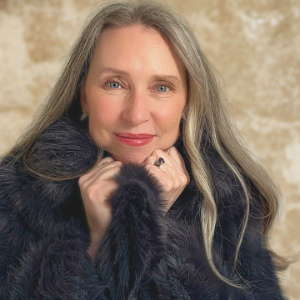
Jill Walton
Life Coach · Nervous System Specialist · Integrative Change Work Practitioner · Emotion, Body & Belief Code Certified
I've helped people shift the patterns that talk therapy alone couldn't touch. The work happens in the body — and that's exactly where I work.
